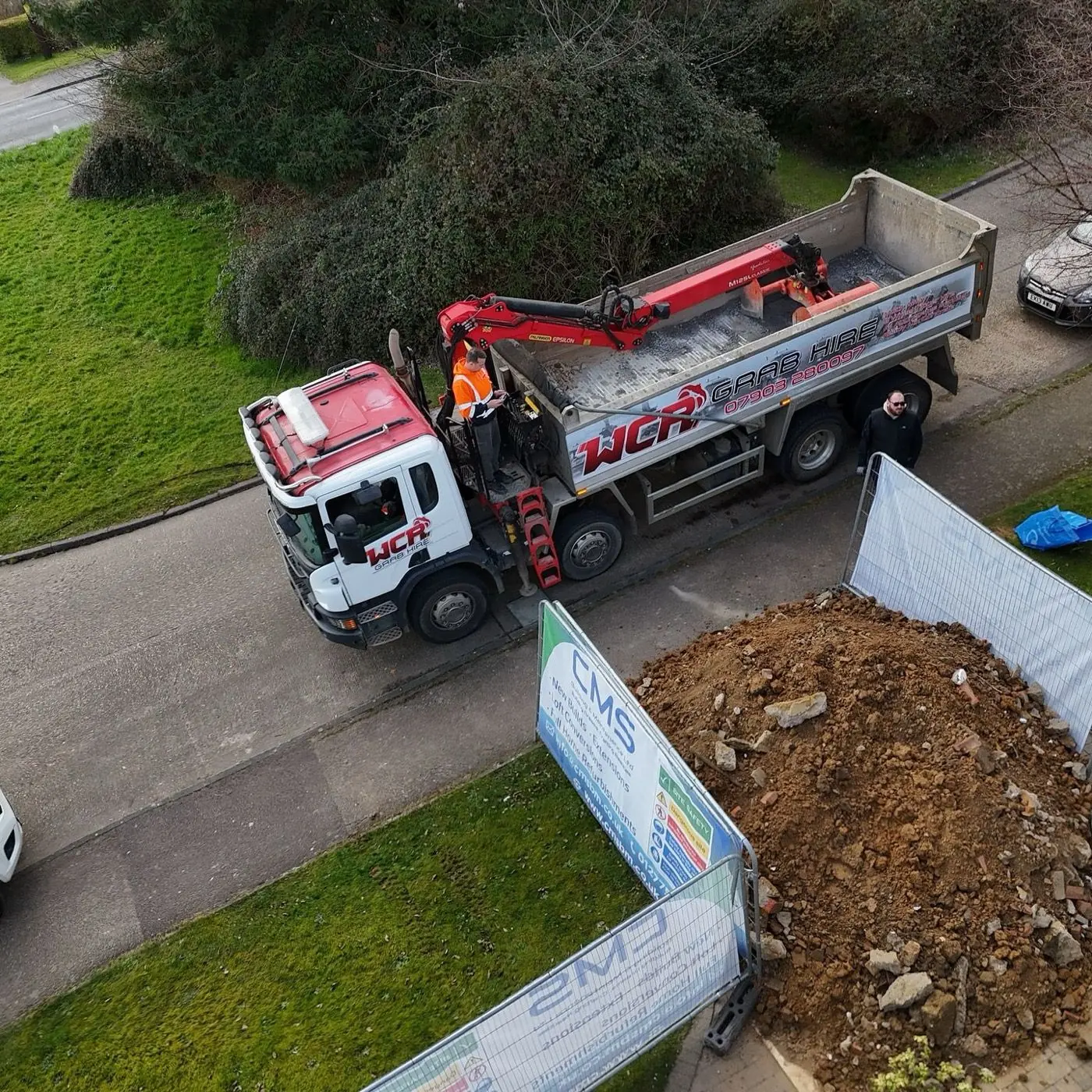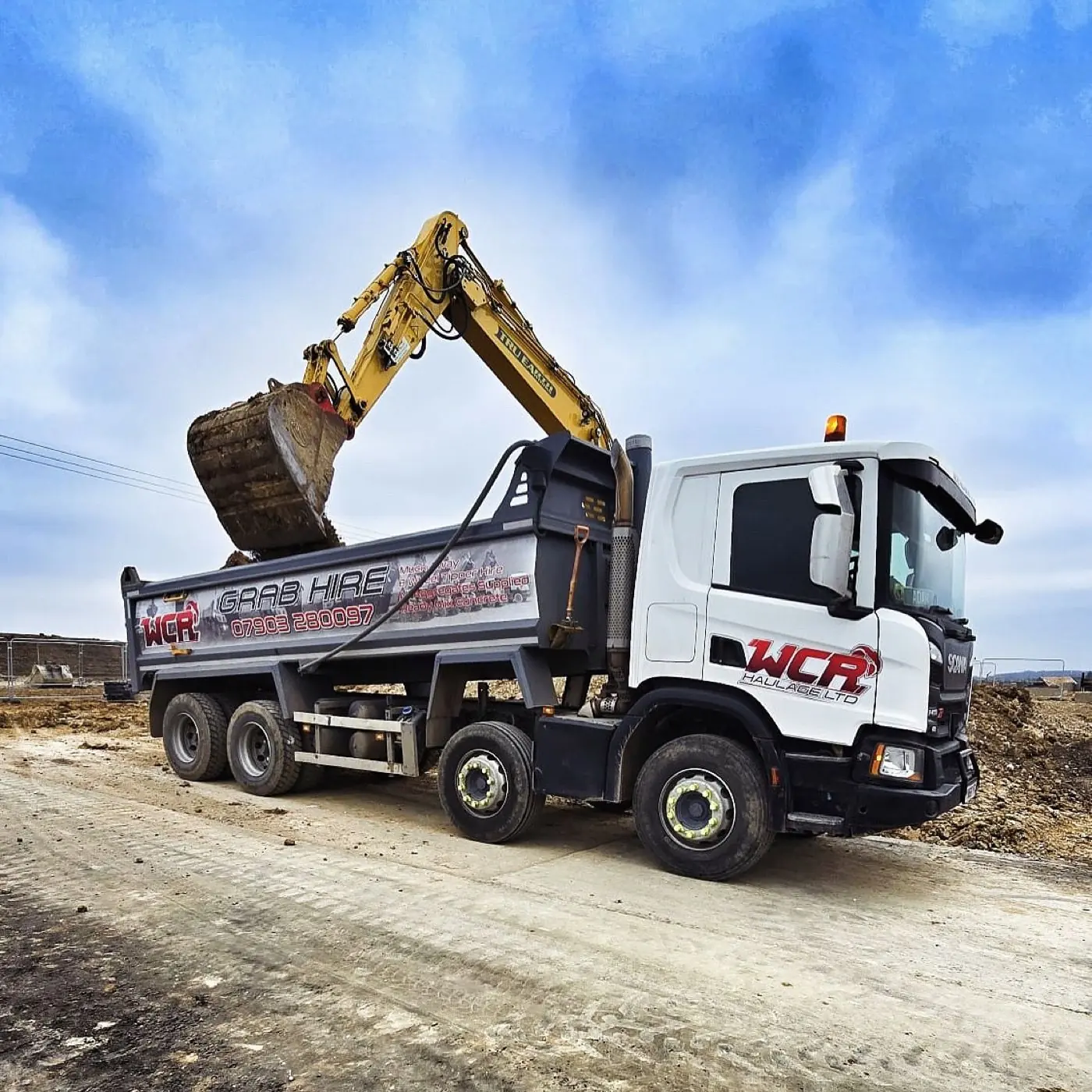
Muck away removes excavated spoil and suitable site material so groundwork can continue. Plan it before digging starts: classification, quantities, loading and access can all change the arrangement.
Describe the spoil accurately
Identify soil, clay, concrete and hardcore separately. Tell us about the previous use of the ground and share any testing or classification information you already have. Unknown or contaminated material must not be booked as ordinary clean soil.
Choose a loading plan
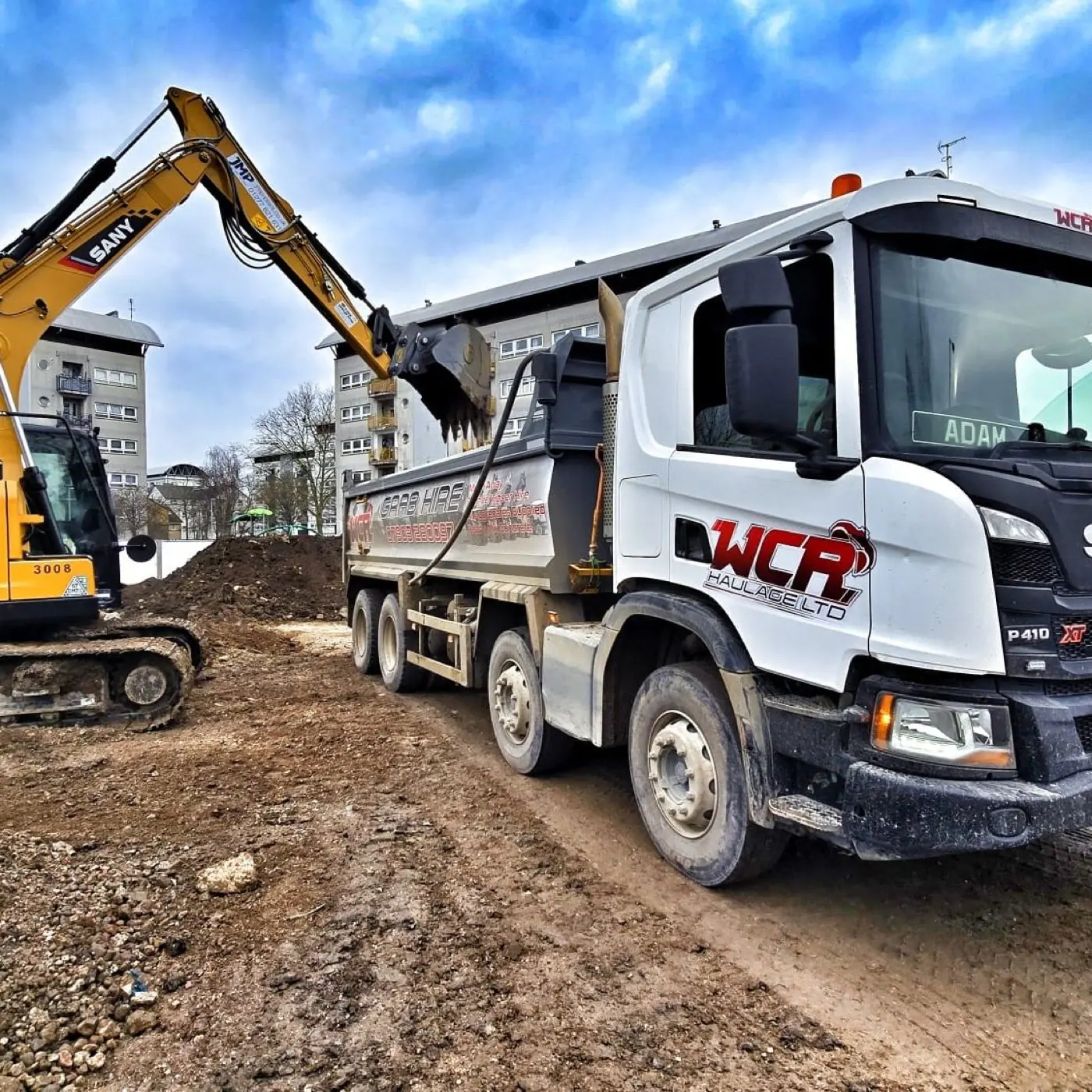
A grab can load a suitable pile using its own arm. A tipper collection normally relies on site loading plant. Tell us which machine is available, where the pile will sit and whether there is room for the vehicle to work safely.
Estimate the sequence of loads
Provide excavation measurements or a pile estimate, the expected material and your dig schedule. Weight limits and material density affect how much can be moved in one load. For repeat movements, nominate a site contact and agree gate times and loading coordination.
Keep the project records
Ask for the carrier and collection details and which records apply to the agreed material. Keep documentation with your project paperwork. The GOV.UK business-waste guide explains the duties for business waste; requirements depend on the material and circumstances.
Prepare your enquiry
Send the postcode, material description, quantity, loading method and preferred date. Attach pictures of the spoil and site entrance to help WCR discuss an appropriate collection.
Your next step
Talk through the actual job.
Bring WCR your postcode, materials, quantities and access photos.
Explore muck away