
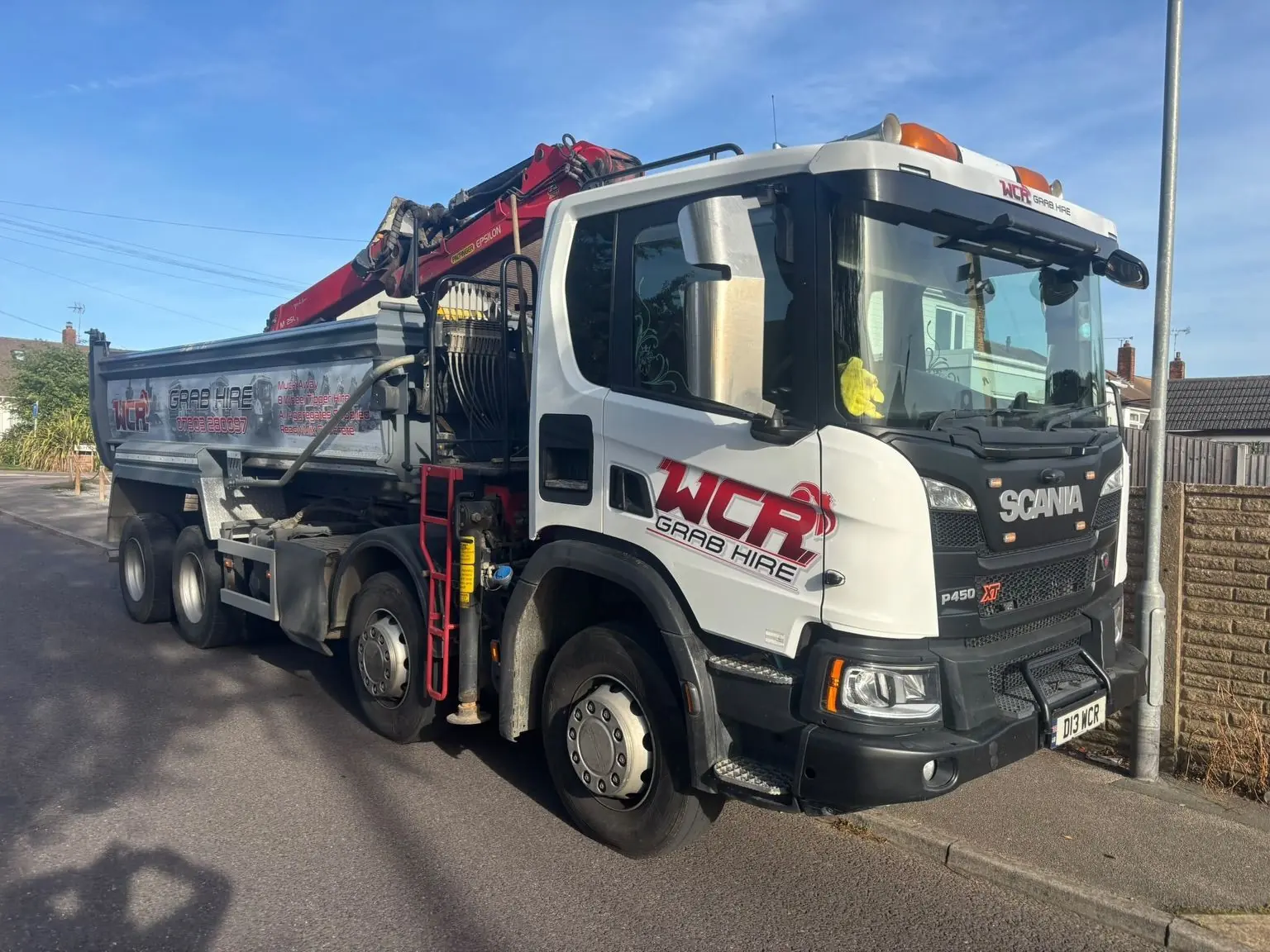
Choose the collection method around the material, loading arrangement and timetable of your job. A grab and a skip solve different problems; neither is automatically right for every site.
How the loading works
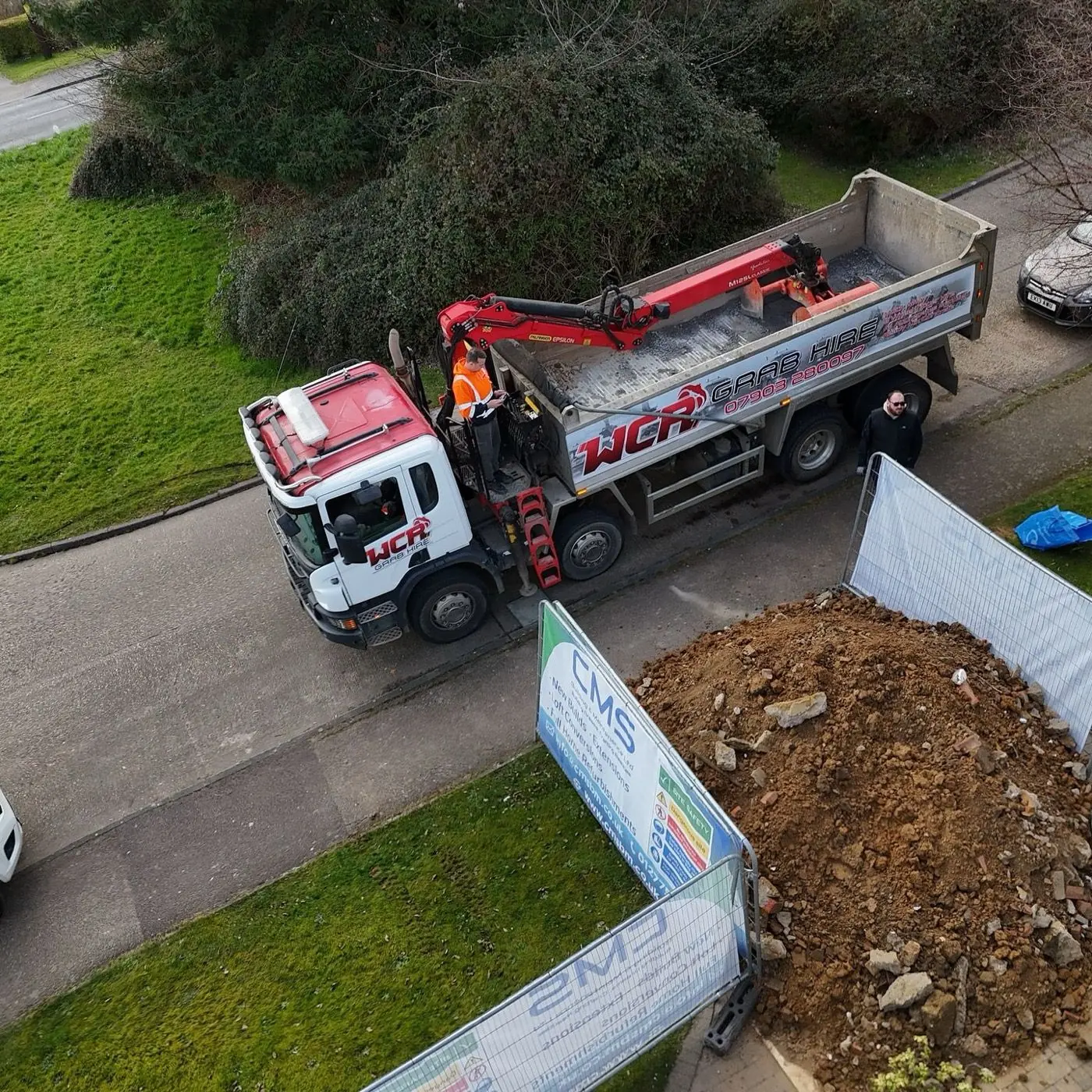
A skip stays in place while you fill it, which can suit waste generated gradually. A grab lorry comes to collect a prepared pile and uses its own arm where access permits. If you already have soil or rubble ready to move, that can reduce handling on site.
Compare capacity using the actual material
Skip dimensions describe volume; a lorry payload is limited by weight as well as usable space. Soil, concrete and timber do not weigh the same. Compare quotes for the same waste type and estimated quantity instead of assuming one lorry always replaces a fixed number of skips.
Check access and timing
A grab needs an agreed loading position and a reachable pile. A skip needs a suitable position for its delivery, use and collection. Tell your provider about roadside parking, private access rules and overhead obstructions. Confirm the arrangements for your particular site rather than assume no permissions are needed.
Ask for comparable quotes
Give both providers the material type, postcode, quantity and preferred date. Ask about loading time, collection timing, permitted materials and any costs if the waste or access differs from the description.
Your next step
Talk through the actual job.
Bring WCR your postcode, materials, quantities and access photos.
Explore grab hire